Sciatica Relief Options and Home Nerve Support
UPDATED: TODAY
LIVE
Nerve Health Research Update Himalayan Findings Under Review Sciatica Relief Methods Compared New Observations on Nerve Aging Home Support Methods Evaluated Nerve Health Research Update Himalayan Findings Under Review Sciatica Relief Methods Compared
Medical Report
Nerve Health Briefing

Still Waking Up With Sciatic Pain? It’s Likely Not Your Spine And Missing This Signal Can Make It Worse

You stretch. You rest. You follow every recommendation. Yet the burning, shooting pain still wakes you up often worse than before.

If you've tried stretching, painkillers, injections or physical therapy, and the burning still wakes you up, you're not alone.

What most people don't realize is that sciatic pain often continues even when the spine, muscles and posture are "correct."

This short briefing explains what researchers are now observing about the sciatic nerve itself, and why traditional approaches fail so often.

This briefing discusses emerging research and does not replace professional medical guidance.

People searching for what to do for sciatica pain often blame movement, posture, or age. But emerging data suggests the issue may not be structural at all. Instead, researchers have observed a gradual process affecting nerve tissue itself, one that operates quietly beneath the surface regardless of alignment or flexibility.

Why Stretching Often Brings Temporary Relief, Then Worse Pain Later

Most approaches target muscles and joints. But if nerve tissue is experiencing what some researchers now call oxidative stress buildup, mechanical interventions may provide brief comfort followed by intensified signals. This is why relief feels incomplete, then the burning returns stronger than before.

The theory centers on a process acting much like corrosion on sensitive nerve fibers. This friction may cause the nerve to send pain signals continuously, independent of spinal position or muscle tension. Treatments focused only on structure miss this layer entirely.

"We kept asking why pain persisted after everything mechanical was corrected. The answer wasn't in the spine."

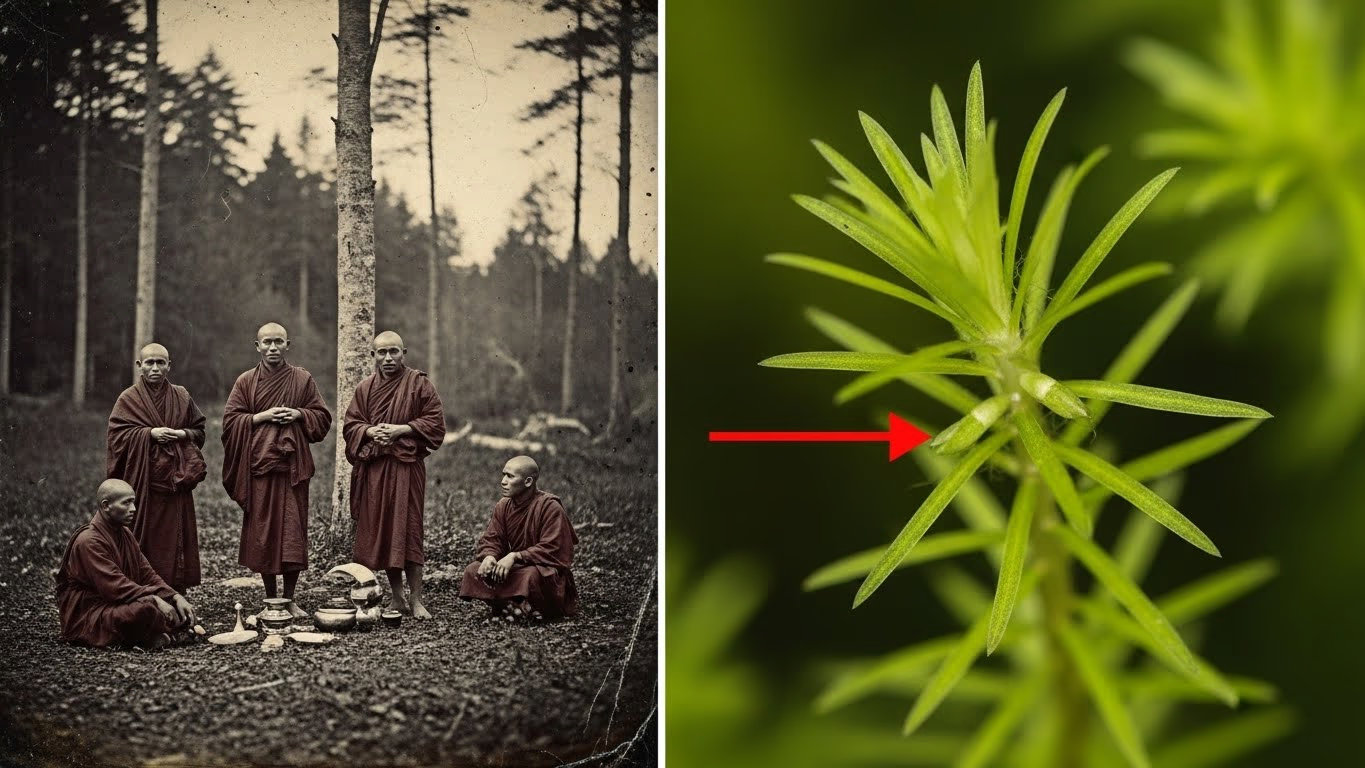
An Unusual Nerve Discovery in Remote Himalayan Villages

Researchers studying isolated mountain communities noticed something strange.

People in their late 70s and 80s walked daily on steep terrain yet reported far less nerve pain than expected.

They weren’t stretching. They weren’t using therapy. And they weren’t taking modern pain treatments.

What they consumed daily raised new questions about how sciatic nerves age and why pain appears in some populations far more than others.

This briefing examines what was found in those villages and how these findings are now being discussed beyond academic research to relieve sciatic nerve pain at home.

The video above walks through the research observations and what this may mean for those dealing with persistent nerve discomfort.

What’s shown may challenge how you’ve been told sciatic pain works.
Watch The Medical Briefing

Informational video intended for educational purposes.

This is not your fault.

Dealing with ongoing sciatic pain is not something most people choose.

But choosing whether to keep guessing or understand what may be contributing to it is.

That choice starts with the video above.

About This Sciatica Relief Report

This page discusses commonly searched topics such as sciatica pain relief, how to relieve sciatic nerve pain, and what to do for sciatica pain at home. The information is presented for educational purposes and does not replace professional medical advice.

Readers interested in home remedy approaches for sciatic nerve pain can learn how nerve focused nutritional support is being studied as part of modern nerve health research.

Related Searches

sciatica relief options home remedy for sciatic nerve pain what is good for sciatic nerve pain how to treat sciatica at home how to alleviate sciatica how to stop sciatic pain ways to reduce sciatic pain how to fix a pinched nerve